Author: thenamearchive_admin

  • Thalia Name Meaning, Origin, and Popularity Trends

    Thalia Name Meaning, Origin, and Popularity Trends

    Thalia: Meaning, Origin, and Modern Popularity Trends

    Picking a baby name can feel like an endless scroll through lists that all start to blend together after a while. You want something timeless, but not overused. You want a name with a rich history, but one that still sounds fresh on a modern playground. That is exactly why so many parents are turning their attention back to classical roots.

    One name that consistently strikes the perfect balance between ancient elegance and modern charm is Thalia. It is light, melodic, and carries a vibrant spirit that feels remarkably contemporary. Whether you first heard it in classical mythology, encountered it through pop culture, or simply stumbled upon it in a baby book, there is a lot to uncover behind these six letters.

    Let’s take a closer look at where this name comes from, what it truly means, and why it might just be the ideal choice for your little girl.

    Understanding the Deep History Behind the Thalia Name Meaning

    To truly appreciate this name, you have to go back thousands of years to ancient Greece. The name stems directly from the Greek word Thaleia, which is rooted in the verb thallein, meaning “to bloom,” “to flourish,” or “to thrive.” When you break down the language, the core essence of the name revolves around growth, joy, and botanical abundance.

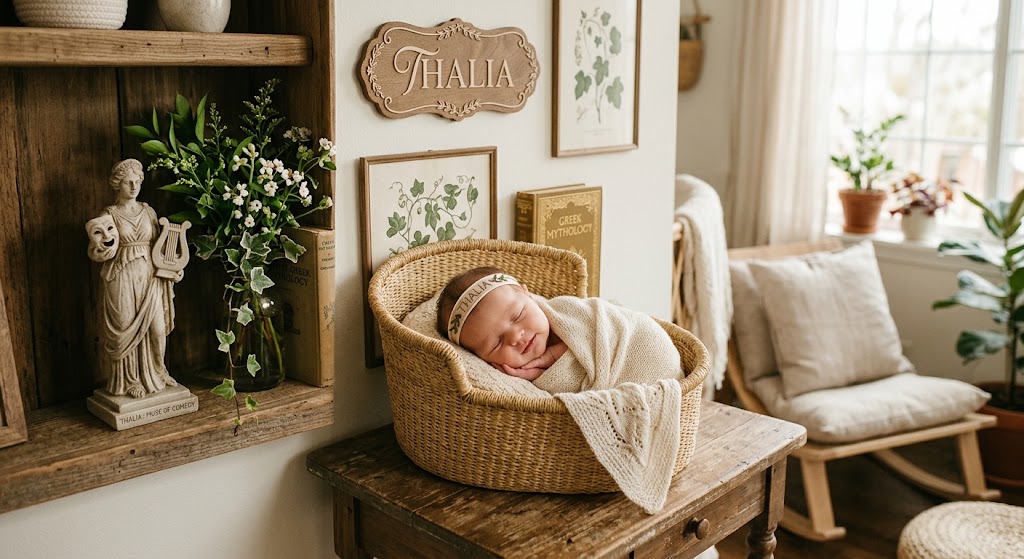
    In classical mythology, the name was not given lightly. It belonged to two prominent figures, each representing celebration and creative energy. The most famous was one of the Nine Muses, the daughters of Zeus and Mnemosyne. Thalia was the Muse of comedy and bucolic poetry. She was usually depicted holding a comic mask and wearing a crown of ivy, symbolizing lighthearted joy, humor, and theatrical art.

    Besides the Muse, another figure in Greek mythology bore the name: one of the Three Graces (or Charites). This Thalia presided over banquets, festivities, and general good cheer. Together, these legendary connections gave the name a permanent association with beauty, laughter, and flourishing life.

    Look, historical roots matter when choosing a name, but so does how the name evolved over centuries. Here is a quick breakdown of how this classic name developed across different historical periods:

    Historical EraPrimary ContextCultural Significance
    Ancient GreeceMythology & LiteratureAssociated with the Muse of Comedy and the Grace of Festivities.
    Roman EmpireLiterary AdoptionLatinized as Thalia; used in classical poetry and drama.
    RenaissanceArtistic RevivalRe-emerged in European literature, opera, and classical painting.
    20th CenturyGlobal MigrationSpread across Latin America, Western Europe, and North America.
    Modern EraContemporary NamingAppreciated as a stylish, multi-cultural, and vintage-chic choice.

    Why the Thalia Name Appeal Resonates in Modern Culture

    Truth is, classical names often go through long cycles of resting before they suddenly feel brand new again. For decades, traditional Latin and Greek names took a backseat to mid-century favorites. However, over the past twenty years, parents have fallen in love with short, vowel-rich names like Ava, Mia, and Chloe. Thalia fits right into that aesthetic preference while offering a distinctive edge.

    Part of its modern magic lies in its global versatility. It rolls off the tongue easily in English, Spanish, French, Greek, and Italian. In Latin American cultures, the name has enjoyed widespread affection for generations, partly elevated by international pop icons and media personalities. In English-speaking countries, it benefits from the “soft-A” visual trend, making it sound graceful without feeling overly delicate.

    Another major factor driving its popularity is how customizable it feels in everyday life. While short on its own, it offers plenty of room for creative nicknames and variations depending on your family’s personal style.

    Here are some of the most popular variations and cute pet names used around the world:

    • Talia: The most common alternative spelling, widely used in Hebrew and Italian contexts.
    • Thalya or Thaliah: Modernized spelling tweaks that add a subtle contemporary twist.
    • Lia / Lia-Mae: A sweet, minimal nickname carved directly out of the final syllables.
    • Tally / Thally: An upbeat, friendly everyday nickname with a cheerful vibe.
    • Tia: A short, affectionate option often preferred in Mediterranean households.

    How to Pronounce and Spell This Classic Name Correctly

    One common concern parents have when considering classical names is whether family, teachers, and friends will struggle with pronunciation. The good news is that this name is generally straightforward, though it does offer a couple of regional pronunciations depending on your cultural background.

    In standard American English, the predominant pronunciation is thah-LEE-uh (rhyming with Dahlia). The initial “Th” produces a soft breathy sound, followed by an emphasis on the second syllable. However, in many European languages and in Spanish-speaking regions, the initial “Th” is pronounced as a crisp, hard “T” sound, leading to tah-LEE-ah.

    Neither pronunciation is “wrong”-it simply depends on your preferred dialect and heritage. If you want to avoid initial spelling confusion, some parents opt for the simplified spelling without the “h.” However, retaining the original spelling preserves that direct, elegant link to classical antiquity and Greek mythology.

    Matching Middle Names and Siblings

    Finding a first name you love is only half the battle. You also need a middle name that flows naturally and a combination that sounds cohesive with existing or future siblings. Because this name ends in a soft, open vowel sound, it pairs exceptionally well with middle names that start with strong consonants or carry distinct rhythmic structures.

    Here is a helpful chart showcasing how different middle name styles pair with this classical choice:

    Style CategoryExample PairingsRhythmic Flow Notes
    Classic & TraditionalThalia Rose, Thalia Elizabeth, Thalia JaneSingle-syllable middle names anchor the soft ending perfectly.
    Nature-InspiredThalia Violet, Thalia Wren, Thalia AutumnComplements the original “blooming” meaning of the name.
    Modern & EdgyThalia Sloane, Thalia Harper, Thalia HarlowCreates a striking contrast between ancient and contemporary styles.
    Vintage CharmThalia Genevieve, Thalia Maeve, Thalia BeatrixEnhances the sophisticated, old-world elegance of the first name.

    When it comes to sibling sets, you have plenty of room to play. If you love thematic harmony, you can pair it with other classical Greek names like Alexander, Penelope, Phoebe, or Sebastian. If you prefer a more subtle connection, focus on matching the overall vintage-chic vibe with names like Julian, Iris, Clara, or Leo. The key is maintaining a balanced rhythm so no single name overpowers the other.

    Personality Traits Associated With This Name

    While a name certainly does not dictate a child’s future, naming psychology suggests that the sounds and meanings associated with a name can subtly influence how people perceive us. Names linked to joy, art, and nature tend to carry warm, bright expectations.

    Given its connection to the Muse of Comedy and the Grace of Festivity, people naturally associate this name with creativity, optimism, and social charisma. It sounds expressive and energetic, suggesting someone who approaches life with enthusiasm and a sense of humor.

    Here are a few key personality associations often connected with this vibrant name:

    • Artistic Sensitivity: A natural affinity for drama, literature, music, and creative self-expression.
    • Warmth and Humor: A cheerful, outgoing demeanor that brings light and laughter into group settings.
    • Resilience and Growth: Directly reflecting the meaning “to bloom,” symbolizing adaptability and personal development.
    • Intellectual Curiosity: An innate desire to explore new ideas, stories, and cultural perspectives.

    Choosing the Perfect Name for Your Family’s Journey

    At the end of the day, picking a baby name is an deeply personal emotional choice. You can analyze charts, read historical texts, and poll your friends, but what matters most is how the name feels when you say it out loud. Does it sound like someone you want to welcome into your family?

    Here’s the deal: a great name grows with your child. It should sound sweet on a toddler, confident on a young adult, and distinguished on a professional later in life. This particular choice easily checks all those boxes. It carries centuries of intellectual and artistic history, yet it feels lively and light enough for everyday life in the modern world.

    Before making your final decision, spend a few days testing the name out in real-world scenarios. Say it out loud with your last name, write it down on a piece of paper, and see how it feels. If it brings a smile to your face, you might have just found the perfect fit.

    Frequently Asked Questions About Thalia

    What Is the Exact Meaning of the Name Thalia?

    The name originates from the ancient Greek word Thaleia, which comes from the verb thallein, meaning “to bloom,” “to flourish,” or “to thrive.” It is strongly associated with botanical growth, youth, and joyous celebration.

    Is Thalia a Popular Name in the United States?

    In the United States, it is a well-known name that sits comfortably in the middle ranks of top baby girl names. It is recognizable and stylish without being overused, making it a great choice for parents who want a distinctive yet familiar name.

    How Do You Pronounce Thalia Correctly?

    In standard US English, it is most commonly pronounced as thah-LEE-uh (with a soft “th” sound, rhyming with Dahlia). In Mediterranean and Spanish-speaking regions, it is frequently pronounced as tah-LEE-ah with a hard “T” sound.

    What Is the Biblical Meaning of Thalia?

    The name is of classical Greek mythological origin rather than biblical origin. However, the variant spelling Talia exists in Hebrew, where it means “dew of God.” While historically separate, the two names are often treated as variations of one another today.

    Is Thalia a Greek Name or a Spanish Name?

    The root of the name is ancient Greek, originating in Greek mythology. However, it has been widely adopted across Hispanic cultures for generations, making it an extremely popular and natural choice in both Greek and Spanish-speaking communities.

    What Are the Best Nicknames for Thalia?

    Some of the most popular nicknames include Lia, Tally, Tia, Thally, and Taya. Because it is a compact three-syllable name, many parents also choose to use the full name without any shortened nickname at all.

    Who Was Thalia in Greek Mythology?

    In ancient Greek mythology, the name belonged to two major figures: one of the Nine Muses (the Muse of comedy and idyllic poetry) and one of the Three Graces (the goddess of festivities and botanical abundance).

    Final Thoughts on This Timeless Choice

    Finding a name that blends history, meaning, and beautiful phonetics is no easy task, but classical options make a compelling case. With its ancient roots in art and nature, along with its effortlessly modern sound, it is easy to see why this name continues to capture the hearts of parents around the world. If you are searching for a name that represents growth, joy, and creative spirit, this timeless option deserves a top spot on your shortlist.

  • Camille Name Meaning, Origin, and Popularity Trends

    Camille Name Meaning, Origin, and Popularity Trends

    Camille Name Meaning, Origin, and Cultural History

    Choosing a baby name often feels like trying to find a needle in a haystack. You want something that sounds timeless, rolls off the tongue effortlessly, and carries a rich history without feeling dusty or out of date. If you have been searching through endless baby name lists, you have likely come across a classic that hits every single one of those marks.

    Truth is, few names manage to bridge the gap between vintage charm and modern sophistication quite like this one. It feels right at home on a newborn wrapped in a hospital blanket, a creative professional leading a meeting, or an artist showcasing their work in a gallery. But what actually lies beneath those sleek seven letters?

    Let’s look at it directly. Behind the soft vowels and delicate cadence sits a story that stretches back thousands of years. From ancient Roman religious rituals to Parisian art salons and contemporary American nurseries, the journey of this name is as fascinating as it is enduring.

    The Fascinating Origins and Ancient History of Camille

    To really understand where this name comes from, we have to travel back to ancient Rome. Long before it became a mainstay in French or English-speaking households, it existed as the Latin name Camillus for boys and Camilla for girls. In Roman culture, a camillus was a young person who assisted high priests during sacred religious ceremonies and sacrifices.

    Because these acolytes were required to be free-born children of noble birth with both parents still living, the title carried immense prestige. It was intrinsically tied to purity, devotion, and high social standing. The Latin root itself may even predate Roman civilization, possibly originating from the ancient Etruscan culture or early Phoenician dialects, where it was associated with religious service and nobility.

    As the centuries passed, the name transformed. The French adapted the Latin terms into a single, elegant, unisex form that captured the imagination of French aristocracy during the Middle Ages and the Renaissance. It was during this period that the name solidified its reputation for quiet elegance and refined grace.

    By the time the name crossed the English Channel and eventually made its way across the Atlantic, it had developed a distinct identity in the English-speaking world. While historically used for both boys and girls in France, it became predominantly feminine in the United States and other English-speaking nations.

    Linguistic Meaning and Symbolic Interpretations

    When you look up the literal translation, most etymological sources will tell you that it means young ceremonial attendant or acolyte. While that is the literal historical definition, the symbolic meaning goes much deeper than ancient temple duties.

    Look, root meanings in ancient languages were deeply connected to spiritual virtues. Because Roman temple helpers had to embody perfection, devotion, and high character, the name carries strong connotations of:

    • Purity and Noble Birth: Representing untainted character and high moral standards.
    • Devotion and Service: A connection to spiritual dedication and community purpose.
    • Grace Under Pressure: Poise in sacred, formal environments.
    • Timeless Beauty: A sense of understated elegance that never goes out of style.

    In addition to its Latin heritage, some language experts note connections to the sweet-smelling chamomile herb, adding an association with healing, calm, and soothing strength. Whether you lean into the historical Roman nobility or the subtle botanical vibe, the underlying symbolism remains consistently positive and empowering.

    Popularity Trends Across the Decades in the US

    Here’s the deal: popularity charts for baby names can be wildly unpredictable. Some names spike overnight because of a hit movie or pop song, only to vanish into obscurity five years later. Others maintain a steady, comforting presence across generations. This name falls firmly into the second category.

    In the United States, it has enjoyed a remarkable run of consistent appreciation. It was a well-known, respected choice throughout the early 20th century, but experienced a significant surge in interest starting in the 1980s and 1990s. Parents seeking an alternative to overly saturated classics like Catherine or Caroline found the perfect middle ground here.

    Today, Social Security Administration data shows that it remains securely planted in the top 300 names for girls in the US. It possesses that coveted sweet spot status: universally recognized and easy to spell, yet far from overused. Your daughter likely won’t be one of four girls with the same name in her elementary school classroom.

    Decade / EraUS Popularity StatusPrimary Cultural Context
    Late 19th CenturyModerate UsageTraditional choice influenced by French heritage and classical literature.
    1920s – 1950sSteady BaselineA quiet, respected understated classic across suburban American communities.
    1980s – 1990sSignificant PeakRising popularity as parents searched for chic, European-sounding feminine names.
    2000s – 2010sTop 250 StabilizationMaintained consistent ground alongside soft, vowel-rich vintage revivals.
    2020s – PresentModern ClassicValued for its soft phonetic appeal, international adaptability, and timeless feel.

    Why the Phonetics and Rhythm of Camille Work So Well

    Have you ever wondered why certain names just sound inherently beautiful? It often comes down to basic phonetics. Linguists study how sounds interact with one another, and this name happens to contain a perfect combination of soft consonants and warm vowels.

    The initial hard K sound provides a strong, confident anchor. Immediately following it, the smooth ah or uh vowel transitions effortlessly into the liquid L sound. The name glides across the palate without any harsh interruptions or awkward consonant clusters.

    And then there is the rhythm. In American English, the emphasis typically falls on the second syllable (kuh-MEEL). This iambic meter creates a gentle, rising cadence that pairs beautifully with a vast variety of middle and last names. Whether paired with a short, punchy one-syllable surname or a longer, complex last name, it holds its ground effortlessly.

    Middle Name Ideas and Complementary Combinations

    Finding the right middle name is all about balance. Because this option is multi-syllabic with a soft finish, it works well with crisp, single-syllable choices as well as longer, flowery options. To be honest, it is one of the most versatile anchor names you can choose.

    If you prefer a classic, traditional aesthetic, pairing it with short, timeless middle names creates an aristocratic, clean sound. If you want something more modern or nature-inspired, contemporary choices blend surprisingly well with its vintage roots.

    Style CategoryRecommended Middle NameOverall Aesthetic & Vibe
    Classic & TimelessRoseElegant, soft, traditional, and deeply romantic.
    Classic & TimelessGracePolished, gentle, and universally beloved.
    Modern & BotanicalIvyChic, fresh, nature-focused, and full of life.
    Modern & BotanicalSageEarthy, contemporary, serene, and grounded.
    Vintage RevivalMaeveStrong literary connections with a charming antique touch.
    Sophisticated & BoldElizabethRegal, structured, and commanding respect.

    When testing combinations, say the full name out loud three times fast. Check for flow, rhythm, and any accidental tongue-twisters. Pay close attention to how the last letter of the first name blends into the first letter of the middle name.

    Nicknames and Variations Around the World

    One of the best features of this name is how easily it adapts to different personalities and global cultures. Whether you want a short, spunky nickname for a toddler or a formal international variation for family heritage reasons, there are plenty of avenues to explore.

    For everyday nicknames, parents love options that feel casual and warm. Some popular choices include:

    • Cami / Cammie: The most common, friendly, and accessible nickname option.
    • Mimi: A playful, vintage-inspired diminutive that feels youthful and fun.
    • Milla / Mila: A sleek, contemporary spin that aligns with modern trends.
    • CeeCee: An adorable option derived from the double initial sound.

    Globally, the name takes on captivating forms across different countries and languages. In Italian and Spanish cultures, you will frequently hear Camilla, which adds a melodic final vowel. In Slavic languages, Kamila or Kamilka are extremely popular. In Scandinavian regions, the spelling often swaps the C for a K, yielding Kamilla.

    This cross-cultural flexibility means that no matter where life takes your child-whether traveling abroad, studying languages, or working internationally-their name will be recognized, easy to pronounce, and warmly received.

    Notable Figures and Pop Culture Influence

    A name is shaped significantly by the people who have borne it throughout history. Fortunately, this name boasts an inspiring roster of trailblazers, artists, athletes, and fictional heroines who bring depth and character to its legacy.

    In the world of fine arts, Camille Claudel stands out as a brilliant 19th-century French sculptor whose dramatic life and extraordinary talent left an indelible mark on European art history. In literature, Camille Desmoulins played a pivotal role as a journalist and politician during the French Revolution, demonstrating the power of the written word during turbulent times.

    Moving into modern pop culture and sports, we see the name thriving across disciplines:

    • Camille Grammar: Television personality and pop culture figure recognized across American media.
    • Camille Muffat: The late French Olympic swimming champion who inspired millions with her athletic mastery.
    • Camille Jordan: The renowned French mathematician whose work in group theory remains fundamental today.

    In film, television, and books, characters with this name are almost always portrayed as intelligent, resilient, and intriguing. They rarely fit the damsel-in-distress trope; instead, they are written as sharp, multi-dimensional individuals who drive the plot forward.

    Frequently Asked Questions About Camille

    What Does The Name Mean Historically?

    Historically, it originates from the Latin term Camillus or Camilla, which referred to a young noble person who served as an acolyte during religious rituals in ancient Rome. It symbolizes moral purity, devotion, noble birth, and refined spiritual grace.

    Is Camille A Unisex Name Or Exclusively Feminine?

    In English-speaking countries like the United States, it is used almost exclusively as a feminine name. However, in French-speaking countries, it remains a traditional unisex name used for both boys and girls, though it tilts slightly more feminine in recent usage statistics.

    How Do You Correctly Pronounce Camille In American English?

    In American English, the standard pronunciation is kuh-MEEL, with the emphasis placed firmly on the second syllable. In native French, the pronunciation is closer to kah-MEEYAH, where the double L sound softens into a soft y sound.

    What Are The Most Popular Nicknames For This Name?

    The most widely used nicknames include Cami, Cammie, Mimi, and Mila. Some families also prefer CeeCee or Millie as creative alternatives depending on personal taste and family traditions.

    Is This Name Currently Growing In Popularity?

    It maintains a steady, secure position within the Top 300 names for girls in the United States. While it is not experiencing a hyper-trendy surge like some social-media-driven names, it enjoys a stable, classic trajectory that protects it from feeling dated in the future.

    What Middle Names Pair Best With It?

    Short, single-syllable middle names like Rose, Grace, Mae, and Sage offer excellent balance. However, longer traditional names like Elizabeth or Alexander also pair beautifully if you prefer a more formal, aristocratic overall sound.

    What Are The Common International Variations Of This Name?

    Common international variations include Camilla in Italian, Spanish, and Portuguese; Kamila or Kamilla in Eastern European and Scandinavian languages; and Kamille in German. All of these forms share the exact same Latin roots and heritage.

    Final Thoughts on Choosing This Classic Name

    At the end of the day, selecting a name for your child is one of the very first gifts you give them. It is something they will carry on school attendance sheets, college applications, wedding invitations, and career achievements.

    By choosing a name with deep historical roots, effortless phonetics, and a perfect balance of soft sophistication and quiet strength, you give your child a title that grows alongside them. It fits a curious toddler, a determined teenager, and an accomplished adult with equal grace.

    By the way, if you are looking for a name that avoids temporary fads while offering an undeniable touch of international elegance, this timeless classic deserves a spot at the very top of your shortlist.

  • Mei-ting Name Meaning, Origin, and Cultural Trends

    Mei-ting Name Meaning, Origin, and Cultural Trends

    Mei-ting Name Meaning, Origin, and Popularity Trends

    Choosing a baby name is one of those major milestones that feels both exhilarating and slightly overwhelming. You want something that sounds pleasant when called across a room, carries genuine depth, and connects to a rich background. If you have been exploring unique options with roots in East Asian culture, the name Mei-ting might have caught your attention.

    It carries a graceful rhythm, a poetic blend of character meanings, and a timeless feel that fits nicely inside modern naming lists. Truth is, many parents across the United States are looking outside traditional Western origin lists to find choices that feel distinct without being overly complex. Let’s look at it directly: understanding how this name is constructed, what it symbolizes, and how it translates into everyday life makes all the difference.

    Understanding the Mei-ting Name Meaning and Historical Background

    To really understand what makes this name special, you have to look at the Chinese characters used to form it. Unlike many English names that come from single old words or locations, names built from Mandarin syllables gain their identity through character pairings. The syllable “Mei” (美 or 梅) and the syllable “Ting” (婷 or 婷) each carry distinct interpretations depending on the characters selected by parents.

    The most frequent character combination uses Mei (美), which translates directly to “beautiful” or “pretty,” paired with Ting (婷), which refers to grace, elegance, or slim posture. When combined, the name paints a cohesive image of refined grace and beauty. Another popular variation utilizes the character for the plum blossom (梅) for the first syllable. In traditional Chinese art and literature, the plum blossom represents resilience and perseverance because it blooms bravely in the cold of late winter.

    Historically, naming conventions in Chinese culture always prioritised intention. A name was never picked just because it sounded nice; it was selected to bestow blessings, convey high hopes, or align with family lineage traditions. Over generations, this specific pairing has remained a classic feminine option because it balances aesthetic soft sounds with positive personal values.

    Cultural Roots, Characters, and Translation Nuances

    Look, navigating names from tonal languages can feel tricky if you are reading them purely in English. The name uses the Pinyin romanization system, which converts Mandarin pronunciations into standard English letters. Depending on the tonal accents used when speaking Mandarin, the character meanings shift subtly.

    Here is a helpful breakdown of the primary character combinations associated with the name and their primary attributes:

    First Syllable (Mei)Second Syllable (Ting)Combined SymbolismTone Profile
    美 (Beautiful)婷 (Graceful)Graceful Beauty, EleganceSoft, Harmonious
    梅 (Plum Blossom)婷 (Graceful)Resilient Grace, Spring BloomPoetic, Classic
    美 (Beautiful)庭 (Courtyard / Family)Home Harmony, Inner RadianceGrounded, Warm
    媚 (Charming)婷 (Graceful)Captivating Charm, PolishVibrant, Modern

    By the way, formatting the name in English often comes down to personal style or administrative ease. In traditional Chinese contexts, the family name comes first, followed by the given name. In Western environments, people typically format it as a single word (Meiting), a hyphenated name (Mei-ting), or two separate words (Mei Ting). Each style holds the exact same meaning, though hyphens can help Western readers pronounce both syllables clearly.

    Pronunciation and Everyday Usability in Western Contexts

    One of the top questions parents ask when considering international names is whether relatives, teachers, and peers will be able to pronounce it without constant correction. The good news here is that the phonetic structure is extremely friendly to English speakers.

    The first syllable, Mei, is pronounced almost identically to the English month “May” or the word “may.” The second syllable, Ting, rhymes perfectly with common English words like “sing,” “ring,” or “king.” Put them together, and you get “May-TING” or “MAY-ting,” with a soft emphasis on the first syllable in casual conversational English.

    • Phonetic Spelling: MAY-ting
    • Syllables: 2
    • Ease for English Speakers: Very Easy (utilizes standard English vowel sounds)
    • Common Nicknames: Mei, May, Ting, Tinnie

    And because the sound profile is compact and bright, it avoids the mispronunciation issues that can happen with longer or more complex foreign choices. It blends seamlessly onto attendance sheets, email headers, and sports rosters while keeping its distinct identity intact.

    Current Popularity Trends for the Name Mei-ting

    While the name has enjoyed long-standing popularity across East Asia-particularly in Taiwan, Mainland China, Singapore, and global diaspora communities-its usage in North America has followed a fascinating pattern. Rather than spiking suddenly due to pop culture crazes, it maintains a steady, timeless presence.

    In recent years, modern parents in major metropolitan areas across California, New York, Washington, and Texas have embraced diverse naming options. The trend toward shorter, melodic names ending in “-ing” or “-i” fits right into modern preferences alongside choices like Mia, Maya, or Lily. While it rarely ranks in the top 100 on standard Social Security Administration baby name lists, its rarity is actually a major selling point for families seeking a standalone identity.

    Region / MarketPopularity LevelPrimary Demographic AppealStyle Classification
    United States (National)Uncommon / NicheMulticultural, Modern FamiliesInternational Classic
    US West Coast (CA, WA)Moderate / RisingUrban, Asian-American CommunitiesCultural Heritage Choice
    Canada & UKSteady / Gentle RiseGlobal Minded FamiliesShort Melodic
    East Asia (TW, CN, SG)Consistently PopularGeneral PopulationTraditional Feminine

    Here’s the deal: picking a name outside the top 50 means your child won’t be one of four kids with the exact same name in their preschool class. It strikes a great middle ground between familiar phonetic sounds and distinct cultural flair.

    How To Choose The Perfect Name: Siblings and Middle Name Combinations

    If you are thinking about this option for your daughter, you are probably wondering how it pairs with sibling names and middle name structures. Because the name itself is two syllables and ends on a soft consonant sound, it pairs remarkably well with both short and long middle names.

    When pairing it with a Western middle name, balancing syllable counts works best. A one-syllable or three-syllable middle name creates a pleasant cadence when spoken out loud. Here are a few balanced pairing ideas to consider:

    • Classic Pairings: Mei-ting Rose, Mei-ting Grace, Mei-ting Elizabeth
    • Modern Pairings: Mei-ting Jade, Mei-ting Claire, Mei-ting Sloane
    • Nature-Inspired Pairings: Mei-ting Iris, Mei-ting Willow, Mei-ting Fern
    • Sibling Match Ideas: Kai, Ren, Linnea, Mei-ling, Sora, June

    If your family carries a multi-syllable last name, the compact nature of this choice helps keep the entire full name light and easy to say. Conversely, paired with a short single-syllable surname like Chen, Lee, or Smith, it creates a crisp, memorable signature.

    Why Parents Love This Name Today

    Parenting culture today leans heavily toward authenticity and meaning. Today’s families want names that tell a story rather than just following short-lived media trends. That is exactly why names with deep-rooted linguistic histories continue to win over new parents.

    To be honest, the appeal comes down to three main factors:

    • Rich Symbolism: The core concepts of resilience, natural beauty, and elegance offer a lovely personal legacy.
    • Global Versatility: It navigates multicultural environments effortlessly, making it ideal for international families or global travelers.
    • Simple Spelling: English transliteration keeps the spelling straightforward, minimizing administrative headaches.

    Whether you are honoring family heritage or simply fell in love with its melodic tone, the name brings a quiet confidence that ages gracefully from childhood into adulthood.

    Frequently Asked Questions About Mei-ting

    What Is the Origin of the Name Mei-ting?

    The name originates from Chinese culture and language, specifically derived from Mandarin character pairings. It has been used for generations across Chinese-speaking regions and global diaspora communities as a classic feminine given name.

    How Do You Correctly Pronounce Mei-ting?

    In standard English contexts, it is pronounced as “MAY-ting.” The first syllable sounds like the month of May, and the second syllable rhymes with “sing” or “ring.”

    Is Mei-ting a First Name or a Last Name?

    It is primarily used as a given (first) name. While single-syllable elements like Mei or Ting can occasionally appear in compound family names, this specific combination functions almost universally as a personal given name.

    What Does the Name Mei-ting Mean in Chinese?

    The standard character combination (美婷) means “graceful beauty” or “elegant and pretty.” When spelled with the plum blossom character (梅婷), it symbolizes resilience and enduring grace.

    How Should I Format the Name in English?

    You can write it as Mei-ting (hyphenated), Meiting (single word), or Mei Ting (two separate words). All three styles are widely accepted in legal documents, school records, and official identification across Western countries.

    Is Mei-ting a Boy or Girl Name?

    It is traditionally used as a feminine name due to character choices that denote grace, beauty, and floral themes. However, modern parents sometimes use short forms like Mei or Ting across various gender-neutral contexts.

    Can Mei-ting Be Used as a Middle Name?

    Absolutely. Many multicultural families use it as a middle name to preserve cultural heritage while choosing a Western first name, or vice versa (for example, Emma Mei-ting or Sophia Mei-ting).

    Final Thoughts on Choosing This Name

    Finding a name that feels right takes time, thought, and a bit of instinct. The name Mei-ting stands out as a balanced, meaningful, and phonetically pleasing choice that bridges traditional heritage with modern everyday life. It offers your child a strong identity grounded in grace, elegance, and resilience-qualities that never go out of style.

  • Aurelius Name Meaning, Origin, and Popularity

    Aurelius Name Meaning, Origin, and Popularity

    Aurelius Name Meaning: The Golden History Behind a Timeless Choice

    Choosing a name for your baby is one of the very first major decisions you will make as a parent. You want something that feels sturdy, carries a deep history, and sounds effortless when spoken aloud. In recent years, parents across the United States have started turning away from ultra-common choices in search of classical roots and distinctive sounds. That shift has brought several ancient Roman options back into the spotlight, and one particular name is capturing hearts like never before.

    Aurelius carries an undeniably regal aura. It evokes images of golden light, ancient philosophers, and timeless leadership. Yet, despite its heavy historical roots, it feels surprisingly fresh and approachable for a boy growing up today. Whether you are drawn to its noble background or simply love the warm, rich sound of its vowels, this choice offers a rare combination of distinction and charm. Here is everything you need to know about where it comes from, what it means, and why it might just be the perfect fit for your family.

    Origin and Linguistic Roots of Aurelius

    To really understand a name, you have to look at where it started. The name traces its lineage back to ancient Rome, where it functioned as a prestigious Latin clan name, or nomen. It is directly derived from the Latin word aureus, which translates to “golden” or “gilded.” The root word itself links back to aurum, the Latin noun for gold, which is also why the element gold appears as Au on the periodic table.

    In ancient Roman society, the Gens Aurelia was a prominent family that produced emperors, statesmen, and scholars. Carrying this family name meant you belonged to a lineage associated with nobility, wealth, and high social standing. The literal translation of “golden” was not just about physical gold coins or jewelry; it symbolized light, valuable character, high worth, and rare beauty.

    Look, linguistic evolution is fascinating because names rarely stay in a single form forever. As Latin influenced languages across Europe, this ancient root sprouted various offshoots that parents still use today. You can see its footprint across different cultures:

    • Aurelio: The vibrant Italian, Spanish, and Portuguese variation.
    • Aurèle: The sleek, minimalist French adaptation.
    • Aureliu: The traditional Romanian spelling.
    • Aurelia: The stunning feminine counterpart that has enjoyed its own major renaissance.

    Truth is, very few names manage to preserve their core meaning for over two millennia while still sounding modern. The enduring connection to gold gives the name a built-in warmth that few other classical choices can replicate.

    Historical Legacy: From Roman Emperors to Modern Culture

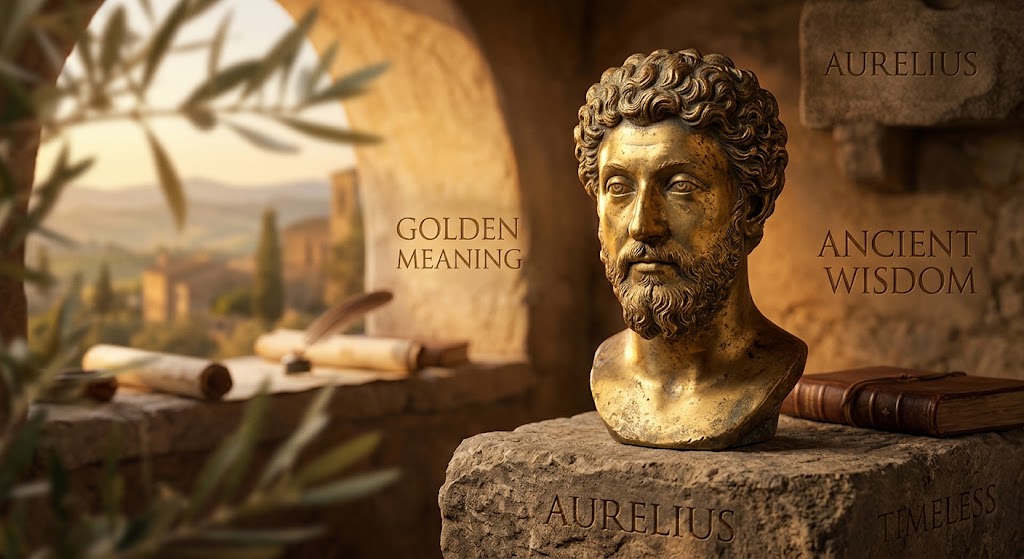
    When most people hear the name, one historical giant immediately springs to mind: Marcus Aurelius Antoninus. Ruling as Roman Emperor from 161 to 180 AD, he is widely regarded as the last of the “Five Good Emperors.” But his legacy stretches far beyond military campaigns and political reign. He remains famous worldwide as a Stoic philosopher whose personal journal entries were compiled into the classic text known today as Meditations.

    Parents today love this connection because Marcus represented a rare combination of supreme power and quiet humility. His writings emphasize resilience, moral duty, kindness, self-reflection, and mental strength. Giving your child a name linked to one of history’s most thoughtful leaders gives them a built-in namesake grounded in wisdom and integrity rather than brute force.

    The name also holds deep roots in early Christian history. Several early saints and bishops bore the name, including St. Aurelius of Carthage, a close associate of St. Augustine in the fifth century. This dual heritage-spanning classical Stoic philosophy and early Christian tradition-gives the choice incredible depth across different cultural and spiritual backgrounds.

    Here’s the deal: modern parents are increasingly searching for names that offer substance. We live in an era where ultra-short or newly invented names are everywhere. Choosing a figure from history who stood for quiet discipline and ethical thought offers a grounding alternative that stands out for all the right reasons.

    Popularity Trends in the United States

    For most of American history, classical Roman names were viewed as overly formal or reserved for textbooks. Throughout the twentieth century, names like John, William, James, and Michael dominated the charts. But the landscape of American baby naming has undergone a massive shift over the last two decades.

    Parents are embracing longer, multi-syllabic classical names that end in soft vowel sounds or strong sibilants. You can see this pattern in the massive rise of names like Silas, Atticus, Augustus, and Oliver. Naturally, this trend opened the door for other long-forgotten Roman classics to make their way into modern nurseries.

    Data from the Social Security Administration (SSA) shows a clear and steady upward trajectory. While it spent decades well outside the top 1,000 boy names in the United States, it recently broke into the top rankings and continues to climb year after year. It hits that elusive sweet spot that parents constantly search for: easily recognizable, simple to spell, yet far from overused in the average classroom.

    Decade / YearUS Popularity StatusStyle Perception
    1900s-1980sRare / UnrankedHistorical, academic, obscure
    1990s-2000sOutside Top 1,000Eclectic, vintage, literary
    2010sEmerging ChoiceSophisticated, bohemian-chic, rare
    2020s-PresentRising Top 500-1,000 ChoiceModern classic, refined, stylish

    And the momentum isn’t slowing down. As parents look for alternatives to ultra-popular Roman choices like Julian or Adrian, this golden option serves as a fresh yet historically grounded alternative.

    Pronunciation, Spelling, and Nickname Options

    One of the biggest concerns parents have when considering an older name is whether people will stumble over the pronunciation. Fortunately, English speakers adjust to it very easily once they hear it spoken out loud.

    In standard American English, the standard pronunciation is aw-REE-lee-us or aw-REEL-yus. It consists of four syllables, with the primary stress falling directly on the second syllable (REE). The initial “Au” sounds like the “au” in author or august, while the ending soft “us” glides smoothly off the tongue.

    To be honest, four-syllable names can sometimes feel like a lot to say on the playground everyday. That is where great nicknames come into play. Having a fun, casual short form allows your child to have a relaxed option for daily life while keeping the full, distinguished name for formal settings.

    Here are some of the best nickname options ranging from classic to unexpected:

    • Ari: Short, energetic, and extremely popular in modern naming trends.
    • Rory: A playful, spirited short form with a warm Celtic feel.
    • Eli: A familiar, friendly option derived from the middle syllables.
    • Reel / Reely: Unique and modern diminutives for a casual touch.
    • Goldie: A sweet, whimsical nod to the literal Latin meaning of the name.

    Having a variety of nickname styles means the name can easily grow with your child from toddlerhood through their professional adult career.

    How To Pair Aurelius With Middle Names and Surnames

    Because it is a four-syllable name ending in a soft “s” sound, pairing it with the right middle name is all about finding the right rhythm and balance. As a general rule of thumb, names with four syllables pair best with short, punchy middle names consisting of one or two syllables.

    When selecting a middle option, try to avoid middle names that also end in an “s” or “us” sound (such as Silas or Marcus), as the repeating ends can make the full name feel repetitive. Instead, look for strong consonants or grounding classic options that anchor the flowing nature of the first name.

    Style CategoryMiddle Name IdeasVibe & Impression
    Short ClassicsJames, Jude, John, PaulTraditional, balanced, grounded
    Nature-InspiredFox, River, Flint, WrenModern, earthy, bohemian
    Single-Syllable StrongGrant, Cole, Blake, VanceSleek, crisp, professional
    Literary & PreppyDean, Reed, Hayes, TateSmart, distinguished, timeless

    Consider how the full combo sounds when read out loud. If you have a short one-syllable last name (like Smith, Vance, or Clark), a grand four-syllable first name creates a balanced cadence. Conversely, if your surname is long and multi-syllable, a simple one-syllable middle name keeps the full name from feeling overwhelming.

    Sibling Name Ideas: Creating a Cohesive Family Set

    If you choose a grand classical choice for one child, you might wonder how to name future siblings so the family set feels unified. You don’t necessarily have to give every child a Roman name, but picking choices with similar historical weight, rich vowel structures, or classical elegance keeps things cohesive.

    Here are several excellent sibling pairings that complement the style seamlessly:

    • Brother Ideas: Caspian, Leander, Lucian, Sebastian, Theron, Evander, Cassian
    • Sister Ideas: Aurelia, Genevieve, Seraphina, Cordelia, Octavia, Celestia, Evangeline
    • Short & Punchy Alternatives: Leo, Felix, Ezra, Milo, Iris, Flora

    Notice how these choices share an elevated, poetic quality without feeling overly matched. Whether you lean into full Roman history or mix in Greek, Latin, or vintage English influences, keeping the overall tone sophisticated will ensure your kids’ names sound great together on family holiday cards.

    Why Parents Are Choosing Aurelius Today

    So, what is driving the rapid rise of this ancient name in modern American nurseries? It comes down to a shift in what parents want out of a name today. Decades ago, fitting in was the primary goal; parents wanted names that blended into the crowd. Today, parents want choices that carry meaning, individuality, and strength.

    First, the meaning itself-gold-is universally positive. It carries associations of warmth, high value, light, and enduring beauty. Unlike names tied to specific occupations, physical traits, or aggressive meanings, a “golden” meaning feels timelessly optimistic.

    Second, pop culture and literature have helped demystify classical names for young parents. From historical dramas to fantasy literature, audiences have grown comfortable with melodious, historical names. Characters bearing ancient roots feel heroic and refined rather than outdated.

    Finally, it simply sounds stunning. The cadence of soft vowels paired with strong internal consonants creates a rich audio profile. It manages to sound simultaneously soft and strong, gentle and commanding-a balance that modern parents actively seek out for their children.

    Frequently Asked Questions About Aurelius

    Frequently Asked Questions About Aurelius

    What Does Aurelius Mean?

    The name directly originates from the Latin word aureus (derived from aurum), which means “golden” or “gilded.” In ancient Rome, it carried connotations of high value, light, honor, and nobility.

    Is Aurelius a Boy or Girl Name?

    It is traditionally used as a masculine name. The most common traditional feminine counterpart is Aurelia, while Aurelie and Aurelina serve as popular feminine variations in European languages.

    How Do You Pronounce Aurelius?

    In American English, it is most commonly pronounced aw-REE-lee-us or aw-REEL-yus. The emphasis is placed on the second syllable, and the initial “Au” makes a soft “aw” sound.

    Is Aurelius a Rare Name in the United States?

    While its popularity has been rising steadily over the past decade, it remains relatively rare compared to mainstream choices. It offers a distinctive, uncommon option that is easily recognized but unlikely to be shared by multiple kids in the same classroom.

    What Are Good Nicknames for Aurelius?

    Popular short forms and nicknames include Ari, Rory, Eli, Aury, and Goldie. These options range from modern and trendy to playful and traditional.

    What Is the Famous Historical Connection to Aurelius?

    The most famous historical figure with this name is Marcus Aurelius, the second-century Roman Emperor and Stoic philosopher best known for his classic philosophical work, Meditations.

    What Middle Names Pair Well With Aurelius?

    Short, one- or two-syllable middle names tend to pair best with this four-syllable first choice. Excellent options include traditional and crisp choices like James, Jude, Grant, Cole, Dean, and Fox.

    Final Thoughts on Choosing a Golden Classic

    By the way, finding a name that checks every single box-deep historical roots, beautiful meaning, great nickname options, and a stylish sound-is no easy task. That is precisely why this Roman classic is gaining so much love among modern parents.

    It bridges the gap between ancient history and modern style effortlessly. It honors a legacy of Stoic wisdom, strength, and quiet dignity while offering a warm, approachable vibe for a child growing up today. If you are looking for a name that shines bright, stands out gracefully, and carries a golden legacy, this timeless choice deserves a top spot on your baby name list.

  • Min-jun Name Meaning, Origin, and Popularity Guide

    Min-jun Name Meaning, Origin, and Popularity Guide

    Min-jun: The Complete Guide to Meaning, Origin, and Trends

    Choosing the right name for a child is easily one of the most exciting-and overwhelming-parts of early parenthood. You want something that sounds great when spoken aloud, carries a deep personal significance, and stands the test of time. If you have been looking into modern global names with deep roots, you have almost certainly come across this classic choice.

    Min-jun has dominated baby name charts in South Korea for over two decades. It balances strength, intelligence, and modern style effortlessly. But what makes this two-syllable name so enduringly popular, and why is it finding a warm reception among parents around the world?

    Let’s look at the true origins, rich cultural history, and linguistic details behind one of the most iconic contemporary Korean names for boys.

    Understanding the Meaning and Roots of Min-jun

    To really appreciate the depth of this name, you have to look at how Korean names are built. Most Korean given names are composed of two distinct Sino-Korean syllables, each derived from traditional Chinese characters known as Hanja. Because multiple Hanja characters can share the exact same pronunciation, a single name can hold several beautiful meanings depending on the specific characters chosen by the parents.

    The first syllable, Min, is most frequently written with the Hanja character meaning “clever,” “quick-witted,” “smart,” or “gentle.” It conveys intellectual agility and a thoughtful disposition. Parents who choose this syllable often hope their child will navigate life with wisdom, sharp perception, and kindness toward others.

    The second syllable, Jun (often spelled Joon in English transliterations), commonly uses Hanja characters representing “talented,” “handsome,” “exceptionally gifted,” or “outspoken.” When you put these two concepts together, the overarching character profile becomes remarkably clear and inspiring.

    Truth is, the combination creates a harmonious balance. It unites mental sharpness with physical elegance and personal talent. Rather than focusing solely on raw power or passive grace, the name offers a rounded ideal of human excellence that resonates deeply across cultures.

    Why Min-jun Remained a Top Choice for Decades

    In South Korea, name trends often shift alongside cultural waves, television dramas, and celebrity influences. Yet, very few names manage to hold the top spot on national birth registries for more than a couple of years. This name is a remarkable exception to that rule.

    Throughout the 2000s and 2010s, it routinely claimed the number one position for newborn boys across South Korea. It consistently ranked alongside other beloved choices like Seo-jun, Ha-joon, and Do-yun. But its longevity is truly extraordinary. An entire generation of children grew up sharing this proud title.

    Decade / EraPopularity Status in South KoreaKey Cultural Factors
    1990sEmerging TrendShift toward soft yet strong two-syllable masculine names.
    2000-2009#1 Most Popular Boy NameWidespread adoption across major metropolitan areas like Seoul.
    2010-2019Consistently Top 3Pop culture prominence in hit Korean television dramas.
    2020-PresentModern ClassicMaintains strong usage while expanding internationally.

    So, why did it stay on top for so long? Here’s the deal. It sits right in the golden sweet spot of phonetics. It is short, energetic, and rhythmic. It carries soft consonant sounds that feel approachable, yet ends on a clean, decisive nasal tone that gives it structure and weight.

    Furthermore, Korean pop culture played an undeniable role in cementing its global prestige. When the hit television series My Love from the Star premiered in 2013, millions of viewers worldwide fell in love with the lead character, Do Min-jun, played by actor Kim Soo-hyun. That single show introduced the name to international audiences from Los Angeles to Manila, transforming it from a national favorite into a globally recognized handle.

    How To Pronounce and Spell the Name Correctly

    For parents raising children in Western countries, usability and pronunciation are always top priorities. You want a name that honors cultural heritage without forcing your child to correct teachers and colleagues for the rest of their life.

    Luckily, this name translates seamlessly into English-speaking environments. The pronunciation is simple, predictable, and clean once you understand the basic phonetic components:

    • First Syllable (Min): Pronounced exactly like the English word “min” in minimum or mint.
    • Second Syllable (Jun): Pronounced like “joon” or “june,” matching the vowel sound in moon or june.
    • Full Phonetics: MIN-joon (with equal stress on both syllables, or a very light emphasis on the first).

    When writing the name in English script, you will see a few common variations. The Revised Romanization system officialized in South Korea uses the hypenated form Min-jun. However, you will frequently see it written without a hyphen as Minjun, or with an alternate spelling as Min-joon or Min joon.

    All of these spellings represent the exact same Korean name (민준 in Hangul). Choosing between them is simply a matter of personal visual preference and administrative convenience in your home country.

    Key Character Traits and Symbolic Values

    In Korean culture, a name is far more than an arbitrary label. It is considered a foundational gift-an wishful blueprint for a child’s character, future success, and health. Traditional naming practices often consult family elders or professional naming masters to analyze Hanja combinations alongside the child’s birth date and time.

    Parents selecting this specific combination are traditionally looking to bestow several core virtues onto their son:

    • Intellectual Curiosity: A natural drive to learn, think critically, and master complex skills.
    • Refined Elegance: Emotional poise, gentle manners, and respectful communication with peers and elders.
    • Resourceful Leadership: The ability to guide others through talent and wisdom rather than brute force.
    • Inner Strength: Resilience during challenging times, anchored by a clear sense of identity.

    To be honest, these values appeal to parents everywhere, regardless of their background. The desire for a child to be both smart and kind, talented yet grounded, is a universal parenting goal.

    Comparing Min-jun to Other Popular Korean Boy Names

    If you are building a shortlist of Korean male names, it helps to see how different options compare in terms of tone, meaning, and global ease of use. Many modern Korean boy names share the Jun or Min syllables, creating subtle variations in style.

    Name (Hangul)Primary Hanja MeaningsPhonetic Style in English
    Min-jun (민준)Clever + Talented / HandsomeSoft, rhythmic, extremely approachable
    Seo-jun (서준)Auspicious / Composed + TalentedSleek, trendy, modern urban feel
    Do-yun (도윤)Path / Principle + Allow / ConsentMelodic, gentle, gentle vowel flow
    Ha-joon (하준)Great / Summer + TalentedBright, bold, strong initial breath
    Min-jae (민재)Clever + Ability / TalentCrisp, energetic, sharp ending

    Look at the subtle differences here. While Seo-jun carries a slightly sleeker, ultra-modern vibe and Do-yun leans into a soft, melodic flow, Min-jun stands firm as the timeless middle ground. It feels grounded without sounding dated, and stylish without feeling like a temporary fad.

    Cultural Advice for Choosing a Korean Name in the US

    If you are an diaspora family, a multicultural couple, or simply someone who admires Korean culture, selecting a traditional given name in a Western setting comes with a few practical considerations. Here are a few tips to ensure a smooth naming process:

    • Check Middle Name Harmony: Many parents raising kids in North America pair a Korean given name with a traditional Western middle name (or vice versa) to give their child maximum flexibility in personal and professional life.
    • Consider Legal Documentation: Decide early on whether you want to include a hyphen on official government documents like birth certificates and passports. Some digital registration systems in the United States do not support hyphens, turning Min-jun into Minjun automatically.
    • Practice Family Pronunciation: Run the name past non-Korean relatives or friends. You will quickly find that almost everyone can pronounce this name correctly on their very first try, which is a massive practical benefit.
    • Explore the Hanja Options: If you want to adhere to tradition, spend time researching the specific Hanja characters for your child’s name with family elders or a knowledgeable specialist to ensure the exact personal meaning aligns with your hopes.

    By taking these steps early, you ensure that the name serves as a lifelong bridge between cultural heritage and daily practical living.

    Frequently Asked Questions About Min-jun

    What Does Min-jun Mean?

    The name is most commonly translated as “clever and talented” or “smart and handsome.” It is formed by combining the Sino-Korean syllable Min (meaning clever, gentle, or quick-witted) with Jun (meaning talented, handsome, or exceptional).

    How Do You Pronounce Min-jun Correctly?

    It is pronounced as MIN-joon. The first syllable sounds like the English word “min” in minimum, and the second syllable rhymes with “moon” or “june.”

    Is Min-jun a Male or Female Name?

    It is almost exclusively used as a masculine given name in South Korea and among overseas Korean communities.

    How Is Min-jun Written in Korean Characters?

    In the Korean alphabet (Hangul), the name is written as 민준. When written in official Chinese characters (Hanja), various combinations can be used depending on the specific meaning selected by the family.

    Is Min-jun Still Popular in Korea Today?

    Yes, while it peaked as the number one overall boy name during the 2000s and 2010s, it remains a beloved modern classic that consistently places high on Korean naming registries.

    Can Non-Korean Families Choose This Name?

    Yes. Many multicultural families and parents living abroad choose the name due to its pleasant sound, noble meanings, and easy pronunciation across different languages.

    Should Min-jun Be Written With a Hyphen?

    Using a hyphen (Min-jun) is standard under South Korea’s official Revised Romanization system, but writing it as a single word (Minjun) or two words (Min Joon) is also widely accepted and legally valid in most countries.

    Final Thoughts on Choosing This Standout Name

    At the end of the day, selecting a name is about finding a combination that speaks to your values and feels right for your family’s journey. Min-jun stands out as a remarkable choice because it effortlessly bridges heritage and modernity.

    It carries an uplifting set of meanings centered around intellect, character, and talent. It sounds crisp and welcoming in any language, and it holds a storied place in modern cultural history. Whether you are honoring your roots or looking for a name with true international appeal, this timeless choice offers everything you could ask for.